When Luxury Packaging Becomes a Strategic Brand Asset
June 18, 2026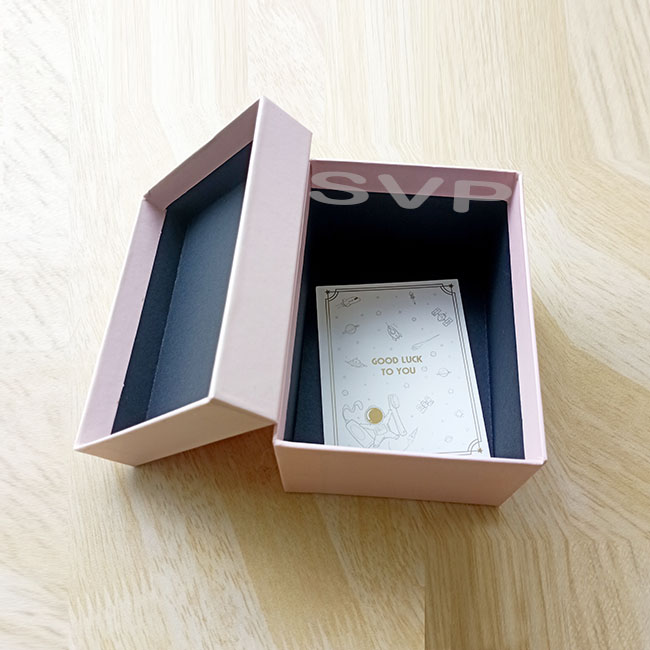
Rigid Boxes 2026: When Luxury Packaging Becomes a Strategic Brand Asset
At a premium electronics brand's warehouse in Shenzhen's Bao'an District, a procurement manager is wrestling with a difficult decision: 1,000 custom rigid boxes, occupying ten full pallets of floor space, with warehousing costs five times higher than equivalent corrugated boxes. Yet the marketing team insists—because after the previous season's product launch with rigid boxes, unboxing videos on social media surged by 300%, and the average order value climbed 25%.
This is not an isolated case. In 2026, the global luxury rigid box market is valued at US$8.84 billion, with projections to nearly double to US$15.84 billion over the next decade—a compound annual growth rate of 6.0%. When a packaging box evolves from mere protective function to a strategic brand asset, rigid boxes are fundamentally reshaping the rules of premium retail.
Rigid vs. Corrugated: More Than Just Thickness
Many assume the difference is simply "sturdier cardboard," but technically, these are two entirely different manufacturing philosophies.
A corrugated box relies on its fluted structure—a wavy inner medium sandwiched between two flat liners—using air pockets as a natural cushion. B-flute (approx. 3mm thick) is the workhorse of standard shipping cartons, while E-flute (approx. 1.5mm) is commonly found in high-aesthetic e-commerce applications like subscription boxes. Its key advantage lies in flat storage: unassembled corrugated boxes can be stacked in minimal space and folded on demand.
A rigid box is fundamentally different. It is constructed from high-density paperboard (typically 1200 gsm or above), wrapped with 157 gsm or higher coated art paper, and finished with a solid wall thickness of up to 2mm. These are one-piece, non-collapsible hard shells—pressing on the side wall feels less like cardboard and more like pressing on wood paneling. Because they cannot be flattened, rigid boxes remain fully erect from factory to end-user, inherently incurring higher warehousing and transportation costs.
Cost Structure: What Does a 3-5x Price Premium Buy?
Industry veterans often cite a rule of thumb: for identical specifications, the unit cost of a rigid box is three to five times that of a corrugated box.
That premium buys more than just thickness. Rigid box production involves extensive manual processes—grayboard cutting, paper lamination, and precision right-angle assembly—each step relying on skilled labour. By contrast, corrugated boxes can run on high-speed automated lines, with more flexible MOQs: rigid boxes typically require 500 units minimum, whereas corrugated orders can start at 100 pieces.
A more hidden cost lies in warehousing and secondary packaging. Because they cannot be folded, 1,000 rigid boxes may fill an entire truck. More critically, the fine printing and film lamination on a rigid box's exterior are highly susceptible to scratching during transit, so most brands are forced to place each rigid box inside an additional corrugated shipping carton before dispatch. In effect, you are paying for two layers of packaging for a single product.
Application Segmentation: Who Uses What—and Why?
Given the steep cost, why is the market expanding so rapidly?
The answer lies in usage-scenario divergence. 2026 data clearly illustrates this divide:
Scenarios Favoring Rigid Boxes:
Luxury goods with unit prices above US$100 (jewelry, haute horlogerie, premium chocolates)
Products displayed on physical retail shelves that need to "speak for themselves"
Brands that treat unboxing as a content-generation engine—the subtle air resistance and dampened friction when slowly lifting a lid delivers a two-second psychological cue of luxury
Case in point: after switching to custom rigid boxes, LuxeCraft Watches not only saw a social-media exposure surge but also boosted average order value by 25%
Scenarios Favoring Corrugated Boxes:
High-volume e-commerce and subscription box operations
Cost-sensitive shipping supplies for scaled fulfilment
Products that are heavy or already impact-resistant (books, apparel, daily commodities)
A counterintuitive truth: rigid boxes do not outperform corrugated in impact resistance. The fluted structure of corrugated is a natural energy-absorbing layer, whereas the rigid construction of a rigid box may, under rough handling, transmit shock directly to the contents inside.
2026 New Variable: Sustainable Rigid Boxes
Historically, sustainability has been the Achilles' heel of rigid boxes—magnetic closures, foam inserts, and film laminates complicate recycling. But the industry is adapting rapidly.
The 2026 trend is the Mono-Material Rigid Box: entirely paperboard-based, using no magnets or plastic coatings, preserving the premium tactile feel while achieving 100% curbside recyclability. Meanwhile, material giants like Metsä Board are showcasing molded fiber technology at Interpack 2026—using 3D-formed wood pulp to directly manufacture rigid packaging, bypassing traditional lamination processes altogether.
Which One Is Right for Your Brand?
To sum it up in one sentence: if the packaging itself is part of the product experience, choose rigid; if packaging is merely the vehicle to deliver the product, choose corrugated.
For premium brands, a rigid box is not a cost line—it is a narrative vehicle for brand storytelling. For e-commerce sellers, a set of well-designed custom mailer boxes paired with quality parcel tape may generate more repeat purchases than an extravagant rigid box that fails to deliver practical value.
As the overall packaging supplies market powers toward a projected US$474 billion at a 4.8% CAGR, selecting the right packaging box is ultimately a decision about how your brand chooses to converse with your consumer.